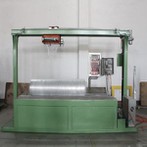
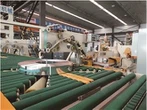
In cable manufacturing and post-processing, winding is not simply a matter of collecting the cable. It directly affects the cable's forming quality, transportation stability, and storage efficiency, and can even indirectly impact downstream packaging and shipping costs. Therefore, choosing a suitable cable wrapping machine is essentially providing fundamental assurance for the entire production process.
Many factories, when selecting equipment, often focus only on speed or price, neglecting the compatibility with their products, production line structure, and long-term production plans. This ultimately leads to low equipment utilization and frequent modifications. Below, we systematically outline the key selection points for cable wrapping machines from a practical engineering application perspective.
Defining Cable Types
Before choosing a cable winding machine, the primary issue is to clearly define your cable types and production requirements. Different types of cables vary significantly in winding methods, tension requirements, and support structures. Ignoring this will prevent even the most advanced equipment from achieving the desired results.
- Differences in wire diameter and number of cores: Single-core, double-core, and multi-core cables have different flexibility and winding radii, requiring the equipment to have adjustable supports and winding clamps.
- Cable materials: PVC, rubber, XLPE, and other materials have different rebound properties, friction coefficients, and flexibility, requiring matching winding tension control methods.
- Winding length and weight: Long or heavy cables place higher demands on the stability of the rotating mechanism. If the equipment's load capacity is insufficient, it can easily lead to coil collapse and distortion.
- Special cables: For example, fiber optic or flexible control cables require equipment with more precise tension control and consistent winding capabilities.
During the selection phase, it is recommended that factories list all major cable specifications and conduct a compatibility assessment for each specification to ensure that the equipment can cover the existing and potentially future product range.
The Role of Winding in the Production Line
Many factories only consider the equipment itself during the selection process, neglecting its role in the overall production line. Whether winding is an independent operation or an integral part of the production line directly impacts equipment selection, control systems, and interface design.
- Independent workstation: Typically used for small batches or multi-specification products, offering flexibility but requiring frequent manual intervention. The equipment should feature quick adjustment, simple tension control, and a movable base.
- In-line winding: The equipment needs to work closely with extrusion, metering, and cutting processes, ensuring synchronization and continuity to prevent production line blockages.
- Post-winding packaging integration: The compatibility of the wound cable with automatic packaging machines, strapping machines, or boxing systems needs to be considered in advance, taking into account coil diameter, width, and weight.
Therefore, considering the winding equipment from the perspective of the overall production line layout is more important than simply looking at individual machine parameters. Many factories, when upgrading to automation in the future, will incur additional modification costs if they neglect interface design.
Automation Level Selection
While fully automated equipment is undoubtedly advanced, determining whether it suits the actual production scenario of the factory is crucial for selection.
- Semi-automatic winding machine: Suitable for factories with varying specifications and small batch sizes. The equipment is flexible to operate, requires short debugging time, and is easy to maintain.
- Fully automatic winding machine: Suitable for production lines with stable output and fixed specifications. It can significantly reduce manual intervention and improve product consistency, but the investment cost and maintenance requirements are higher.
The key to automation level selection lies in matching it with the factory's production capacity. Fully automatic is not always the best solution; if there are many types of cables and frequent changeovers, a semi-automatic machine may be more efficient and economical. The selection should be based on a comprehensive assessment of production volume, changeover frequency, operator skill level, and maintenance capabilities.

Tension and Winding Consistency
The neatness of winding affects not only the appearance but also the safety of subsequent packaging, transportation, and storage. Tension control and consistent winding diameter are core factors determining long-term stability.
- Tension Adjustment Mechanism: Mature winding machines utilize spring, servo, or electronic tension control to ensure uniform tightness of each cable layer, preventing collapse and distortion.
- Winding Consistency: Consistent winding diameter and width directly affect packaging efficiency and stacking stability.
- Long and Heavy Cables: When tension control is unstable, long cables are prone to internal stress concentration, which may lead to bending or cracking after leaving the factory.
It is recommended that factories require equipment manufacturers to provide tension adjustment curves and winding diameter consistency test data during equipment selection to ensure long-term stable operation.
Safety and Ease of Operation
Although industrial stretch wrapping machines are not complex to operate, their safety and ease of use directly impact production efficiency and equipment lifespan.
- Protective Structures: Does the equipment have protective covers, anti-pinch devices, and emergency stop buttons, especially during high-speed operation?
- User Interface: Is the interface intuitive? Are parameter adjustments easy? Can it support quick switching between product specifications?
- Maintenance Convenience: Are wear parts easy to replace? Are there clear instructions for routine maintenance procedures?
- Training and Operating Standards: Is it easy for operators to learn how to use the equipment? Can the factory quickly establish standard operating procedures?
Choosing safe and easy-to-operate equipment not only ensures employee safety but also reduces equipment failure rates and downtime.
The Importance of Manufacturer Capabilities
Winding machines are not just mechanical equipment; they are a reflection of the manufacturer's engineering capabilities. Even with the same machine specifications, the performance can vary significantly between different manufacturers.
- Engineering Understanding: Does the manufacturer understand the specific needs of different cable products during the winding process, such as tension, winding diameter, and flexibility control?
- Customized Solutions Experience: Can they provide customized solutions based on the characteristics of your factory's production line, rather than simply selling standard models?
- Service Capabilities: Are equipment installation, commissioning, operator training, and maintenance support readily available?
Choosing a manufacturer means choosing the stability and scalability of your equipment for the next few years. A truly good manufacturer will work with you to evaluate your production line and optimize solutions, not just sell you a machine.
Conclusion
Choosing a cable winding machine isn't just about comparing a parameter sheet; it's about making a decision that will impact your production efficiency and stability for years to come.
Jinglin Packaging has long focused on industrial cable winding and downstream packaging equipment. We are more concerned with how the equipment truly integrates into your production environment, not just performing a winding action.
Whether you need a standard model or a customized solution for special cables or production lines, Jinglin Packaging can provide you with the right solution.
If you are evaluating or upgrading your cable winding equipment, please contact Jinglin Packaging and let our equipment truly serve your production needs.