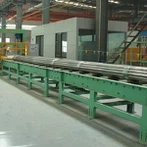
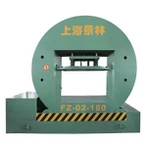
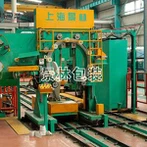
Steel coils are a common product form in steel production, processing and distribution. Because steel coils are typically heavy, bulky and easily affected by external environmental influences on their surfaces, they need to be properly packed according to product characteristics before leaving the plant, warehousing and transport.
Traditional manual packing methods usually require operators to work together to wrap, secure and strap the packaging materials. When coil specifications are large, packaging requirements are high, or production tasks are concentrated, manual operations may come under pressure in terms of efficiency, packaging consistency and operational management.
The steel coil packing machine is an industrial device designed specifically to meet such packaging needs. Through mechanical mechanisms, transmission systems and automated control devices, it performs coil positioning, packaging material wrapping and pack securing. Depending on the equipment configuration, different packaging methods and automated operations can also be achieved.
So, what parts does a steel coil packing machine actually consist of? How does it complete coil packaging? This article introduces the equipment structure, working principle and practical applications.
What Is a Steel Coil Packing Machine?
A steel coil packing machine is an industrial device dedicated to the outer packaging of steel coils. It is mainly used to wrap protective material around the outside of coils, reducing the impact of dust, moisture, friction and other external factors during storage, handling and transportation.
Unlike ordinary product packaging equipment, a steel coil packing machine must take into account the coil's weight, outer diameter, inner diameter and width, as well as the surface protection requirements of the coiled material. The equipment therefore usually needs corresponding load-bearing capacity, positioning capability and packaging mechanisms to handle coils of different specifications.
Depending on the packaging process and equipment design, a steel coil packing machine can use radial wrapping, circumferential wrapping, or a combination of several packaging methods. Common packaging materials include anti-rust paper, plastic film, composite packaging materials and other materials suitable for coil protection.
In practice, steel coil packing machines mainly serve steel producers, steel processing centers, metal material warehousing companies and other industrial sites that require coil packaging.
Main Components of a Steel Coil Packing Machine
Equipment structures and configurations may vary between manufacturers, but a typical steel coil packing machine generally consists of the following main parts.
1. Coil Load-Bearing and Positioning Mechanism
The load-bearing and positioning mechanism is mainly responsible for supporting the coil and placing it in a position suitable for packing operations.
As coil weight and dimensions vary considerably, the load-bearing mechanism must be designed according to the weight, outer diameter and width of the target coil. Common structures include support rollers, support frames, V-shaped support devices and other positioning mechanisms.
During packing, the positioning mechanism must limit coil displacement and provide suitable working conditions for the subsequent wrapping of packaging material.
2. Packaging Material Supply System
The packaging material supply system stores, conveys and releases the packaging material and is an important part of completing the outer wrapping of the coil.
Depending on the packaging process, the equipment can be equipped with a corresponding material roll mounting frame, guide rollers, a feeding mechanism and tension adjustment devices.
The packaging material must be kept at an appropriate tension during conveying. If the tension is too high, the risk of material stretching or breaking may increase; if the tension is insufficient, the packaging material may become slack, wrinkled or unevenly applied.
The material supply system therefore needs to match the packing speed and the movement of the coil.
3. Rotation and Wrapping Mechanism
The rotation and wrapping mechanism is mainly responsible for applying the packaging material to the coil surface.
Depending on the equipment structure, wrapping may be accomplished by rotating the coil, rotating a packaging ring, or a combination of both.
For example, in a ring-wrapping structure, the packaging material is applied around the coil by a rotating packaging mechanism; in other structures, the coil itself rotates so that the packaging material gradually covers the coil surface.
Different mechanisms suit different packaging processes and must be configured according to coil specifications and packaging requirements.
4. Packaging Material Cutting and Securing Mechanism
Once the pack reaches the predetermined requirement, the packaging material must be cut and secured.
Some equipment uses an automatic cutting device to separate the material and finishes the material end with heat sealing, adhesive tape or other securing methods. The method adopted depends on the type of packaging material and the equipment design.
For coils requiring further reinforcement, a strapping device can be added to secure the pack with steel straps or other strapping material.
5. Electrical Control System
The electrical control system coordinates the operation of each mechanism and is an important basis for automated packing.
Common configurations include PLC controllers, touch screens, sensors, drive devices and safety control components.
Operators can set relevant operating parameters according to equipment functions, such as packing speed, number of wrapping turns and packing programs. Sensors can be used to detect coil position, equipment operating status and the actions of related mechanisms.
Through coordinated control between the various parts, the equipment can complete the corresponding packing operations according to the preset program.
How Does a Steel Coil Packing Machine Work?
The specific workflow of a steel coil packing machine depends on the equipment structure and packaging process, but its basic principle is to wrap protective material at the specified position on the coil through load-bearing, positioning, material feeding and mechanical wrapping actions.
It can generally be divided into the following steps.
Step 1: Coil Loading and Positioning
First, the coil to be packed is placed on the load-bearing mechanism of the packing machine by an overhead crane, forklift or other loading equipment.
Once the coil is in place, the positioning mechanism supports it and adjusts its position according to the equipment design so that the coil is in a position suitable for packing.
At this stage, it is necessary to confirm whether the coil's outer diameter, width and weight are within the equipment's working range, and to check whether the coil is placed in a state that meets the packaging requirements.
Step 2: Packaging Material Preparation
According to the coil's packaging requirements, select a suitable packaging material and mount the material roll on the equipment's feeding mechanism.
The operator sets the material feed speed, tension and related operating parameters according to the packaging process.
Before formal packing, it is also necessary to confirm that the material mounting direction, feed path and securing method are correct, so as to avoid material deviation or breakage during packing.
Step 3: Performing the Packing Operation
After coil positioning and material preparation are completed, the equipment begins to execute the packing program.
Depending on the packing method adopted, the coil or the packaging mechanism enters the corresponding motion state, and the packaging material gradually covers the coil surface through the guiding and feeding mechanisms.
For coils requiring multiple layers, the equipment can adjust the number of wrapping turns and the material overlap according to the preset program so that coverage meets the corresponding requirements.
If a coil requires both radial and circumferential packing, the corresponding packaging mechanisms are needed to complete wrapping in different directions.
Step 4: Cutting and Securing the Packaging Material
When the packing operation reaches the preset requirement, the equipment stops the corresponding wrapping action and separates the packaging material through the cutting mechanism.
The material end is then secured according to the packaging process. If the packaging requirements include external strapping, further reinforcement is carried out with the matching strapping device.
After these operations are completed, the coil packing is essentially finished.
Step 5: Unloading the Finished Product
After packing is completed, the equipment moves the coil out of the packing station.
Depending on the site configuration, conveyor rollers, transfer equipment or other handling devices can be used to send the finished coil to the next process, the storage area or the shipping area.
After unloading is completed, the equipment can proceed to the next packing cycle.
Which Steel Coils Are Packing Machines Suitable For?
Steel coil packing machines are mainly used for different types of coiled steel products. However, because the surface characteristics, dimensions and protection requirements of different steels vary, the actual packing methods and material choices also differ.
|
Coil Type |
Product Characteristics |
Packaging Focus |
|
Cold-rolled steel coil |
The surface is usually relatively smooth, with certain requirements on appearance and surface quality |
Reduce friction, scratches and dust adhesion |
|
Hot-rolled steel coil |
Wide range of specifications and weights; some products have iron oxide scale on the surface |
Select appropriate external protective materials according to the product condition |
|
Galvanized steel coil |
The surface has a zinc coating, requiring attention to surface protection |
Reduce the impact of humid environments and handling friction |
|
Color-coated steel coil |
The surface has a coating, with high requirements on packaging contact and surface protection |
Avoid scratches, indentations and other issues during packing |
|
Stainless steel coil |
Surface quality and protection requirements vary by application |
Select suitable packaging materials and wrapping methods according to the surface grade |
Advantages of Steel Coil Packing Machines
Compared with relying entirely on manual packing, mechanized packing can improve the working conditions of the coil packing stage in several respects.
Improved Packing Efficiency
A steel coil packing machine can complete material feeding, wrapping and securing through mechanical transmission and preset programs, reducing part of the repetitive manual work.
For production sites with many packing tasks, a properly configured packing machine helps shorten the packing time per coil and improves the connection between the packing process and the preceding and following production stages.
Improved Packing Consistency
Manual packing is easily affected by operating habits, operator proficiency and working conditions.
By controlling packing speed, material tension and wrapping parameters, a steel coil packing machine can reduce some human variation, giving products packed under the same process a more consistent result.
Reduced Manual Involvement
Steel coils are heavy, and direct manual involvement in some packing operations may involve considerable physical strain and safety risks.
Mechanized packing equipment can reduce direct human participation in repetitive work such as material wrapping and coil adjustment, allowing operators to focus more on equipment monitoring, parameter adjustment and quality inspection.
Adaptability to Different Coil Specifications
By adjusting the load-bearing mechanism, positioning devices and packing parameters, some steel coil packing machines can handle coils of different outer diameters, inner diameters and widths.
For steel processing companies with a wide product range, this adaptability helps reduce the equipment reconfiguration burden when switching packing operations between different products. However, the actual applicable range is still subject to the equipment's design parameters.
How to Choose the Right Steel Coil Packing Machine?
When purchasing a steel coil packing machine, it is not enough to focus only on the degree of automation or the external configuration of the equipment; a comprehensive judgment should also be made in light of the company's actual product specifications, packaging process and production needs.
1. Clarify Coil Specifications and Weight Range
First, compile the coil specifications the company handles daily, including maximum outer diameter, minimum outer diameter, inner diameter, width and maximum weight. These data directly relate to the design of the equipment's load-bearing structure, positioning mechanism and packing space.
2. Determine the Packing Method and Protection Requirements
Different coils have different requirements for packaging coverage and protective effect. Before purchasing, it is necessary to clarify whether radial packing, circumferential packing, end-face protection and additional strapping are required.
3. Evaluate Equipment Capacity
The equipment's working cycle should be evaluated according to the actual packing tasks, including loading, positioning, packing, cutting, securing and unloading. It is not enough to look only at the single wrapping speed; the complete packing cycle must also be considered.
4. Pay Attention to Automation Configuration
Choose semi-automatic or fully automatic equipment according to the site staffing and production organization. At the same time, the interface conditions between the equipment and existing conveyor rollers, overhead cranes and other handling equipment should also be considered.
5. Review Maintenance and Operating Conditions
The equipment's mechanical structure, electrical control system, replacement of wearing parts and daily maintenance requirements should all be included in the purchase evaluation. Understanding in advance how key components are maintained helps companies develop a reasonable equipment management plan.
Jinglin Packaging: Steel Coil Packing Equipment Solutions
Steel coil packing not only affects the external protection of products during storage and transport, but also influences the operating efficiency of the packing process and on-site work organization at steel companies.
Jinglin Packaging focuses on industrial packaging equipment and related solutions, and can provide corresponding equipment configurations and solution support based on a company's coil specifications, packaging materials, packaging process and production needs.
If you are looking for a steel coil packing machine that suits your production needs, you are welcome to contact Jinglin Packaging and provide coil dimensions, weight range, packaging requirements and on-site production conditions. We will provide support on equipment selection and packaging solutions based on your actual application requirements.