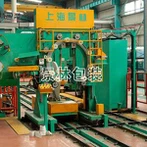
In the copper tube manufacturing industry, packaging is often viewed merely as the final step of the production process; in reality, however, it directly impacts the safety of product transport, warehousing efficiency, labor costs, and the customer's receiving experience. As product specifications diversify and production speeds increase, more enterprises are turning their attention to automated packaging equipment. Yet, a common question arises during procurement: should a company opt for standardized equipment or a customized solution for its copper tube packaging line?
For many enterprises, customization implies higher investment costs and longer lead times, leading many procurement professionals to prioritize standardized equipment. However, practical application reveals that not all production scenarios are suited to a "one-size-fits-all" standardized approach. Understanding the value of customized copper tube packaging lines can help enterprises make more informed investment decisions.
An Overview of Customized Copper Tube Packaging Lines
A customized copper tube packaging line does not imply designing the entire system from scratch; rather, it involves making targeted adjustments to the packaging process, equipment structure, automation features, and interface systems based on standard equipment, all tailored to the enterprise's specific production requirements.
Common customization features include:
- Adjustments for copper tube specification ranges
- Automatic counting functionality
- Automatic sorting systems
- Automatic bundling modules
- Automatic film wrapping systems
- Automatic labeling systems
- Automatic weighing functionality
- Automatic palletizing systems
- Integration with MES or ERP systems
- Adaptation to specific factory layouts
The core objective is to ensure the equipment aligns seamlessly with the enterprise's existing production model, rather than forcing the production line to adapt to the equipment.
Limitations of Standardized Packaging Lines
The primary advantages of standardized equipment are lower costs, faster delivery, and mature, stable technology.
However, for copper tube manufacturers, significant differences often exist between products. For example:
|
Project |
Details of the differences |
|
Copper pipe length |
Ranging from a few meters to over ten meters |
|
Pipe diameter specifications |
From small caliber to large caliber |
|
Package Quantity |
Different clients have different requirements. |
|
Packaging format |
Strapping, stretch wrapping, pallet packaging, etc. |
|
Production speed |
There are significant differences in cycle times across different production lines. |
|
Transportation Requirements |
Standards for domestic transport differ from those for export transport. |
If the equipment cannot adapt to these changes, enterprises may face the following issues:
- Reduced packaging efficiency
- Frequent equipment parameter adjustments
- Increased surface scratching on products
- Excessive manual intervention
- Lower equipment utilization
- Difficulty with future expansion
Over the long term, these hidden costs often far exceed the savings realized at the time of equipment purchase.
Which Enterprises Need Customized Solutions?
Not every enterprise requires a customized copper tube packaging line; if a company deals with uniform product specifications, stable order volumes, and standardized packaging requirements, off-the-shelf equipment usually suffices. However, the following types of enterprises should seriously consider customized solutions:
Wide Range of Product Specifications
When an enterprise simultaneously manufactures products with varying diameters and lengths, the packaging equipment requires high versatility.
Otherwise, frequent changeovers not only hinder production capacity but may also increase the equipment failure rate.
Pursuit of Automation Upgrades
Many enterprises are advancing smart manufacturing initiatives. If there are future plans to integrate robotic palletizing, automated warehousing, or production management systems, the packaging line needs to incorporate the necessary interfaces during the initial design phase to avoid costly retrofitting later.
Rising Labor Costs
Amidst steadily increasing labor costs, many factories aim to reduce their workforce through automated packaging.
Customized solutions allow for equipment configurations optimized for existing workflows, thereby achieving a higher level of automation.
Core Value of Customized Copper Tube Packaging Lines
While many enterprises focus on initial equipment procurement costs, the true priority should be the total cost of ownership over the equipment's lifecycle; from a long-term operational perspective, customized copper tube packaging lines typically deliver the following benefits:
Increased Packaging Efficiency
Designing equipment to match actual production cycle times minimizes idle time and the need for manual intervention.
In some projects, it is not uncommon to see packaging efficiency gains of approximately 20% to 50%.
Reduced Product Damage Rates
Copper tube surfaces are susceptible to dents, indentations, and scratches.
Optimizing conveying methods, clamping mechanisms, and strapping processes effectively mitigates the risk of product damage during packaging.
Reduced Labor Requirements
Features such as automatic counting, strapping, labeling, and palletizing significantly reduce the need for manual labor, thereby boosting overall operational efficiency.
Enhanced Packaging Consistency
Standardized, automated packaging ensures consistent quality across every bundle, helping to elevate the corporate brand image and improve customer satisfaction.
Scalability for Future Production Increases
A well-planned, customized design not only meets current needs but also accommodates future capacity growth, preventing premature equipment obsolescence.
Are customized solutions expensive?
This is a primary concern for many procurement professionals; however, customization does not necessarily equate to high costs.
Some enterprises opt for lower-priced standard equipment during the procurement phase, only to incur escalating costs for modifications, labor, and downtime during subsequent operations-ultimately resulting in a higher total investment.
The key factors to evaluate are:
- Current production requirements
- Future development plans
- Automation upgrade goals
- Return on investment (ROI) timeframe
For enterprises with high annual output, complex product specifications, or long-term growth plans, customized packaging lines often offer a superior return on investment.
Determining the Need for Customization
If an enterprise meets two or more of the following criteria, prioritizing a customized packaging line is recommended:
- Wide variety of product specifications
- Frequent changes in production orders
- High manual packaging costs
- Inconsistent packaging quality
- Significant share of export business
- Plans to build a smart factory
- Future plans for production capacity expansion
- Requirement for integration with existing production lines
Before project initiation, it is recommended that the supplier gain a thorough understanding of the enterprise's production processes, product characteristics, and future plans, rather than simply providing a quote based on the parameters of a single product.
Conclusion
As the copper tube manufacturing industry moves toward automation and intelligent operations, the packaging stage has evolved beyond a simple bundling process into a critical component that impacts production efficiency, product quality, and operating costs. For enterprises dealing with complex product specifications, high automation requirements, or plans for future capacity expansion, a customized copper tube packaging line often delivers superior long-term value.
If you are seeking a copper tube packaging solution tailored to your specific production needs, please contact Jinglin Packaging. We offer professional, customized automated packaging line solutions based on your product specifications, capacity requirements, and factory layout-helping you enhance packaging efficiency, reduce operating costs, and achieve a higher level of automated production.