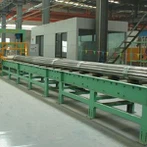
For aluminum processing companies, aluminum coil packaging is not a simple step in the production process. A suitable aluminum coil packaging line not only affects product packaging efficiency but also relates to the surface protection, packaging stability, and overall production costs of the aluminum coil during storage and transportation.
As the application fields of aluminum coils continue to expand, more and more companies are adopting automated packaging equipment to replace traditional manual packaging methods. However, when selecting an aluminum coil packaging line manufacturer, many purchasing personnel face a similar problem: how to determine whether a manufacturer has professional production capabilities?
Choosing a reliable aluminum coil packaging line manufacturer requires not only focusing on equipment parameters but also comprehensively evaluating the company's experience, technical capabilities, quality system, and long-term service capabilities.
Manufacturer Industry Experience
When evaluating an aluminum coil packaging line manufacturer, the first step is to understand their experience in the relevant industry.
Aluminum coil packaging involves multiple stages, including:
- Coil conveying
- Coil positioning
- Outer packaging material installation
- Circumferential winding
- End face protection
- Strapping and securing
- Finished product transfer
Different aluminum coil sizes, weights, and production environments necessitate different design requirements for packaging equipment.
A manufacturer with extensive project experience can typically provide more suitable equipment solutions based on the client's actual production needs, rather than simply offering standardized equipment.
When evaluating a supplier, pay close attention to:
- Whether they have relevant aluminum coil packaging line project case studies
- Whether they have served clients in the aluminum processing, aluminum sheet and strip, and aluminum foil industries
- Whether they can provide actual operation case studies or equipment photos
- Whether they understand the requirements of different packaging standards and transportation methods.
Manufacturers with industry experience are better able to understand practical issues on the production floor, such as packaging speed matching, equipment space layout, and integration with existing production lines.
Equipment Design and Automation Capabilities
Aluminum coil packaging lines are automated equipment. Their core value lies not only in completing the packaging process but also in improving production efficiency and packaging consistency.
When selecting a manufacturer, it's crucial to consider the level of automation and overall design capabilities.
- Automated Conveying System: A stable conveying system helps aluminum coils smoothly enter the packaging area, reducing the need for manual handling.
- Automated Positioning System: Precise positioning helps ensure consistent packaging placement, improving packaging quality.
- Automated Winding and Packaging System: Automated installation, winding, and securing of packaging materials improves production continuity.
- Control System: An advanced control system allows operators to easily adjust equipment parameters and improves equipment management efficiency.
Furthermore, it's essential to consider the manufacturer's ability to optimize equipment design according to customer needs, such as:
- Adaptation to different aluminum coil specifications
- Combinations of different packaging methods
- Matching different production speeds
- Integration with existing production lines
Excellent aluminum coil packaging line suppliers not only sell equipment but also provide comprehensive solutions tailored to their customers' production processes.
Equipment Quality and Manufacturing Capabilities
Aluminum coil packaging lines typically require long-term continuous operation, therefore, the quality of equipment manufacturing directly impacts the user experience.
When evaluating a manufacturer, consider the following aspects:
- Mechanical Structure Design: The design of the equipment frame, transmission structure, and key components affects operational stability.
- Component Selection: High-quality electrical components, transmission assemblies, and control components contribute to improved equipment reliability.
- Processing and Assembly Capabilities: The manufacturer's processing capabilities and assembly processes reflect their manufacturing level.
You can inquire with the supplier about:
- Factory Production Environment
- Processing Equipment Configuration
- Assembly Process
- Factory Testing Standards
If possible, a factory visit provides a more direct understanding of the manufacturer's production capabilities.
Customization Capabilities
The production conditions for aluminum coils vary significantly among different companies, therefore packaging lines often require a degree of customization. For example:
- Different aluminum coil diameter ranges
- Different aluminum coil weights
- Different packaging materials
- Different production cycles
- Different factory layouts
Therefore, when selecting a supplier, it is necessary to confirm their engineering design and custom development capabilities.
A professional aluminum coil packaging line manufacturer should be able to provide:
- Project requirements analysis
- Equipment layout design
- Technical solution planning
- Customized equipment manufacturing
- Installation and commissioning support
Compared to suppliers who simply provide standard equipment, manufacturers with customization capabilities are better able to meet the needs of complex production environments.
Check the Quality Control System
Quality control is a crucial standard for judging the professionalism of an equipment manufacturer.
During equipment production, multiple quality inspection stages are required, such as:
- Raw material inspection
- Component processing inspection
- Electrical system testing
- Equipment operation testing
- Factory acceptance
When purchasing, you can inquire with the manufacturer about:
- Whether they have a complete quality management process
- Whether they conduct whole-machine testing
- Whether they provide equipment acceptance standards
- Whether they support on-site customer acceptance
A sound quality control system can help reduce operational risks after equipment delivery.
After-Sales Service Capabilities
Purchasing an aluminum coil packaging line is not the end of the transaction, but the beginning of a long-term partnership.
Large-scale automated equipment typically involves installation, commissioning, operator training, and ongoing maintenance; therefore, the supplier's service capabilities are crucial.
Key areas to consider:
- Installation Support: Does the manufacturer provide on-site installation guidance or remote technical support?
- Operator Training: Can the supplier help customer employees master the equipment's operating procedures?
- Technical Response: When problems arise during equipment operation, can the supplier provide timely solutions?
- Spare Parts Supply: Long-term, stable spare parts support can help companies reduce equipment maintenance burdens.
A reliable manufacturer should not only focus on equipment sales but also on the customer's subsequent user experience during production.
Don't choose a supplier solely based on price
Price is an important factor in purchasing decisions, but it's not the only criterion.
Prices vary between different aluminum coil packaging lines, typically due to the following factors:
- Level of automation
- Equipment configuration
- Customization requirements
- Component brands
- Manufacturing process
- Service included
Focusing only on the initial purchase price while ignoring equipment performance, stability, and service capabilities may lead to higher maintenance costs later.
A more reasonable approach is to compare:
- Equipment technical solutions
- Manufacturing capabilities
- Project experience
- Service system
- Overall operating costs
Choosing a supplier that matches your production needs is more important than selecting the lowest-priced equipment.
Checklist for Selecting an Aluminum Coil Packaging Line Manufacturer
Before finalizing a supplier selection, you can refer to the following checks:
|
Evaluation Project |
Content to focus on |
|
Industry experience |
Do you have experience with aluminum coil packaging line projects |
|
Technical capabilities |
Does it have automated design capabilities |
|
Customization capabilities |
Can it meet special production needs |
|
Manufacturing capacity |
Does it own its own production plant |
|
Quality control |
Is there a complete testing process |
|
Service capabilities |
Does it provide installation, training, and after-sales support |
|
Comprehensive cost |
Does the equipment performance match its long-term operating costs |
System evaluation can help companies select aluminum coil packaging line manufacturers that better meet their needs.
Conclusion
Choosing an aluminum coil packaging line manufacturer is a decision involving technology, production, and long-term operations. A reliable supplier needs not only high-quality equipment but also industry experience, engineering design capabilities, and a comprehensive service system.
During the procurement process, companies should comprehensively evaluate various aspects, including equipment technology, manufacturing capabilities, quality control, and after-sales support, based on their own production needs, to select a packaging solution that best suits their development.
Jinglin Packaging specializes in the R&D and manufacturing of automated industrial coil packaging equipment, providing professional packaging line solutions for aluminum coils, copper coils, and other metal coils. With extensive project experience and comprehensive manufacturing capabilities, we can provide customized equipment solutions based on customer production needs. Welcome to contact us to learn more about aluminum coil packaging lines and work together to create a more efficient and stable automated packaging process.