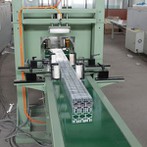
Why Are Steel Coil Packaging Materials Worth Paying Attention To?
Steel coil packaging may look like a simple step after production is completed, but what really determines the packaging result is not only the packaging equipment, but also the packaging materials themselves.
During storage, loading and unloading, and transportation, steel coils may be exposed to moisture, dust, impact, friction, and long-distance shipping. If the packaging materials are not chosen appropriately, it is difficult to achieve the desired protective effect even when an automated steel coil packaging line is used.
Therefore, when planning a steel coil packaging solution, two aspects usually need to be considered at the same time: first, what packaging materials to use, and second, how to apply these materials correctly to the steel coil through packaging equipment.
Common steel coil packaging materials include anti-rust paper, moisture-proof film, plastic film, kraft paper, steel strapping, and various edge and end-face protection materials. Different materials serve different functions, and in practice they usually need to be combined according to the steel coil type, transportation environment, and packaging requirements.
What Are the Common Steel Coil Packaging Materials?
Steel coils are not protected entirely by a single material; instead, multiple materials are used according to actual needs to form a packaging structure with different layers.
|
Packaging Material |
Main Function |
Common Applications |
|
Anti-rust paper |
Reduces the risk of corrosion after the steel coil is exposed to moisture |
Inner and outer layer protection for steel coils |
|
VCI anti-rust paper |
Provides rust protection through volatile corrosion inhibitor technology |
Steel coils with high anti-rust requirements |
|
Plastic film |
Moisture-proofing, dust-proofing, and outer wrapping |
Outer packaging |
|
Moisture-proof film |
Reduces water vapor entering the interior of the package |
Long-distance transportation, ocean shipping |
|
Kraft paper |
Provides basic surface protection |
Inner or outer packaging |
|
Steel strapping |
Secures the packaging structure |
Steel coil bundling |
|
Plastic strapping |
Assists in securing part of the packaging |
Certain packaging solutions |
|
Corner protectors / edge boards |
Protects the edges and end faces of steel coils |
Transportation and handling |
The combination of materials used by different companies may be completely different, so it cannot be simply assumed that one particular material is suitable for all steel coils.
Anti-Rust Paper
Steel tends to rust when it comes into contact with moisture and humid air, so rust protection is a key issue that steel coil packaging must address.
Anti-rust paper is usually used to form a protective layer between the steel coil and the external environment. Some anti-rust papers also use VCI (volatile corrosion inhibitor) technology, which reduces the risk of corrosion on the metal surface through corrosion-inhibiting components.
For cold-rolled steel coils, coated steel coils, and some products with high surface quality requirements, the choice of anti-rust materials deserves particular attention.
In an automated steel coil packaging line, anti-rust paper usually enters the packaging station through a dedicated feeding mechanism and is wrapped according to the steel coil dimensions and the packaging plan.
Plastic Film and Moisture-Proof Film
Plastic film is mainly used for the outer wrapping of steel coils, providing moisture-proofing, dust-proofing, and isolation from the external environment.
For steel coils that require long-distance transportation, especially products shipped by sea, packaging solutions usually need to pay more attention to the issue of water vapor. In such cases, anti-rust paper and moisture-proof film are often used in combination.
However, the thickness, width, and mechanical properties of the film all need to match the specific packaging method. If the material is too thin, it is prone to damage during transportation; if the material chosen is too thick, it may increase packaging material consumption.
Therefore, when designing a steel coil packaging line, the specifications of the packaging materials should also be considered as part of the equipment parameters.
Kraft Paper and Other Paper Materials
Kraft paper and other industrial packaging papers can be used for surface protection of steel coils.
Such materials usually have a certain degree of friction resistance, which can reduce direct contact between the steel coil and other objects during packaging and handling.
In some packaging solutions, paper is not used alone, but is combined with anti-rust paper, plastic film, and other materials to form a multi-layer packaging structure.
Steel Strapping
Unlike anti-rust paper and film, the main task of steel strapping is not rust prevention but securing.
After the outer packaging is completed, the steel strapping can bind the steel coil at designated positions, keeping the packaging materials in place.
An automated steel coil packaging line can usually be equipped with automatic strapping equipment to perform actions such as strap feeding, positioning, tightening, joining, and cutting.
The width, thickness, and number of straps of the steel strapping need to be determined according to the weight, dimensions, and packaging requirements of the steel coil.
Corner Protectors and End-Face Protection Materials
The edges and end faces of steel coils are prone to impact during handling, so some products require additional corner protectors, edge boards, or end-face protection materials.
This is especially true when handling equipment such as lifting gear and forklifts is used, as the edge areas may be subjected to significant localized pressure.
Adding appropriate edge and end-face protection can make the packaging structure more complete.
On a steel coil packaging line or a complete steel coil packaging line, these protective materials can be designed into corresponding manual or automated operation stations according to the customer's packaging process.
Choosing Steel Coil Packaging Materials Based on Transportation Mode
The choice of packaging materials is closely related to the mode of transportation.
Short-Distance Transportation
If steel coils are delivered to a nearby processing plant soon after production, the transportation time is short and the requirements for moisture-proofing and external protection may be relatively simple.
In such cases, basic protective materials can be selected according to the surface requirements of the product.
Long-Distance Land Transportation
During long-distance land transportation, steel coils go through more loading, unloading, transshipment, and road transport stages, so the friction resistance of the packaging materials and the overall securing effect need to be considered.
In addition to surface protection, steel strapping also needs to be properly configured.
Ocean Freight for Export
The ocean shipping environment is usually more complex and the transportation time is longer, so moisture-proofing and rust prevention are key issues to consider in packaging design.
In such cases, anti-rust paper, moisture-proof film, and outer protective materials usually need to be used in combination, and the packaging solution should be adjusted according to the specific shipping route and storage environment.
Planning Steel Coil Packaging Materials Together with Packaging Equipment
When choosing steel coil packaging materials, you should not only consider which material provides the best protective effect, but also whether it is suitable for the actual production process.
A complete steel coil packaging solution usually needs to address three questions at the same time:
What Protection Does the Steel Coil Need?
This determines the type and combination of packaging materials.
How Are the Packaging Materials Applied?
This determines which packaging equipment and processes are needed.
How Can Packaging Efficiency Be Improved?
This determines whether an automated steel coil packaging line is needed.
Only by combining these three questions can a packaging solution truly suitable for the company's production be formed.
Conclusion
Steel coil packaging materials are directly related to the protection of products during storage, handling, and transportation, while the packaging line determines how these materials are applied to steel coils efficiently and in a standardized way.
From anti-rust paper, moisture-proof film, and plastic film to kraft paper, steel strapping, and end-face protection materials, different materials perform different functions. When selecting materials, companies need to make a comprehensive judgment based on the steel coil specifications, surface requirements, storage time, transportation mode, and actual packaging process.
For companies that require automated packaging, material selection should also be planned in parallel with the equipment structure and process flow of the steel coil packaging line.
Jinglin Packaging specializes in steel coil packaging equipment and automated steel coil packaging lines. Based on the steel coil specifications, packaging materials, packaging process, and production takt time, we can plan a matching packaging solution for customers.
If you are selecting steel coil packaging materials, or planning to build or upgrade a steel coil packaging line, you are welcome to contact Jinglin Packaging, provide your steel coil specifications and packaging requirements, and discuss a suitable equipment solution with us.