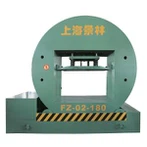
Aluminum coils are one of the most common product forms in the aluminum processing industry, widely used in construction, automobiles, home appliances, packaging materials, and electronics. With the continuous increase in aluminum coil production and customers' increasingly stringent requirements for product appearance quality, traditional manual packaging methods are no longer sufficient to meet the efficiency, quality, and cost control needs of modern factories. Therefore, more and more aluminum processing companies are introducing aluminum coil packaging lines to automate, standardize, and intelligently manage the packaging process.
What is an aluminum coil packaging line?
An aluminum coil packaging line is an automated equipment system specifically designed for the packaging, protection, packing, and conveying of aluminum coil products. Its main function is to protect the products after aluminum coil production using automated equipment, preventing scratches, deformation, moisture damage, oxidation, and other problems during storage, handling, and transportation.
Depending on the production needs of different companies, aluminum coil packaging lines can achieve the following functions:
- Automatic feeding and conveying
- Aluminum coil weighing
- Moisture-proof packaging
- Stretch wrapping
- End-face protection
- Automatic strapping
- Label printing and affixing
- Automatic palletizing
- Data acquisition and management
Compared to traditional manual packaging, automated packaging lines ensure that each coil of product uses a uniform packaging standard, significantly improving packaging quality and production efficiency.
Why do aluminum coils require professional packaging?
While aluminum coils possess good corrosion resistance, they still face numerous risks during production and transportation.
Surface Scratch Risk:
Many high-value-added aluminum coils, such as color-coated, mirror-finish, and anodized aluminum coils, have extremely high requirements for surface quality. Even minor scratches can lead to product downgrading or even scrapping.
Moisture and Oxidation Risk:
In sea freight, warehousing, or humid environments, moisture can easily penetrate the packaging, causing oxidation spots or corrosion on the aluminum coil surface.
Transportation Collision Risk:
Large aluminum coils typically weigh between hundreds of kilograms and tens of tons, making them susceptible to impacts during lifting and transportation, resulting in edge deformation or loosening of the coil layers.
Inconsistent Packaging Standards:
Manual packaging is prone to variations in packaging quality due to differences in operator experience, increasing the risk of customer complaints.
Therefore, establishing a stable and reliable aluminum coil packaging system has become a crucial step for modern aluminum processing enterprises to enhance their product competitiveness.
Composition of an Aluminum Coil Packaging Line
The configuration varies between factories, but most aluminum coil packaging lines typically consist of the following core units.
Conveying System
The conveying system automatically transports aluminum coils from the production line, slitting machine, or finished product area to the packaging station. Common equipment includes:
- Roller conveyors
- Chain conveyors
- V-roller conveyors
- Tilting mechanisms
The stability of the conveying system directly affects the operating efficiency of the entire packaging line.
Automatic Weighing System
Before packaging, the aluminum coil needs to be weighed. An automatic weighing system can:
- Automatically collect weight data
- Upload to MES or ERP systems
- Automatically generate packaging labels
- Improve shipping accuracy
Packaging Material Supply System
Automatically supply packaging materials according to product requirements, such as:
- PE film
- VCI anti-rust film
- Moisture-proof paper
- Woven fabric
- Kraft paper
- Aluminum foil composite material
The system automatically supplies and switches packaging materials according to a set program.
Circular Wrapping Machine
The circular wrapping machine is one of the core pieces of equipment in an aluminum coil packaging line. The machine continuously wraps the aluminum coil with rotating packaging material, ensuring the packaging layer evenly covers the entire coil.
- Tight packaging
- Good protective performance
- Fast packaging speed
- High material utilization rate
Currently, most automated aluminum coil packaging lines use a circular winding packaging method.
Automatic Strapping Machine
After wrapping, the strapping machine secures the aluminum coil. Common strapping materials include:
- PET plastic strapping
- Steel strapping
- Polyester strapping
Automatic strapping ensures secure packaging and improves transportation safety.
Label Printing and Labeling System
The system automatically generates label information based on production data, typically including:
- Product specifications
- Roll number
- Weight
- Batch number
- Customer information
- Barcode
- QR code
This facilitates subsequent warehouse management and logistics tracking.
How does an aluminum coil packaging line work?
While the process flows may vary between companies, the overall workflow is largely the same.
Step 1: Aluminum Coils Enter the Packaging Area
After coming off the production line, aluminum coils are automatically conveyed into the packaging station.
The system automatically identifies the product's dimensions and specifications.
Step 2: Automatic Weighing and Data Acquisition
As the aluminum coils enter the weighing area, the equipment automatically records: weight, inner and outer diameters, and width, and synchronizes this data to the factory management system.
Step 3: Installing Protective Materials
Based on product grade and customer requirements, the system automatically covers the coils with: moisture-proof paper, PE film, and cushioning pads, providing protection for subsequent transportation.
Step 4: Circular Winding Packaging
The packaging material is wrapped in multiple layers by a circular winding device. This stage determines the packaging quality and protective effect.
The system can adjust the overlap rate, number of winding turns, tension, and packaging thickness as needed.
Step 5: Automatic Strapping and Securement
After packaging, horizontal and vertical strapping is performed.
This ensures the packaging structure is stable and will not loosen during transportation.
Step 6: Automatic Labeling
The system automatically prints and affixes labels.
Simultaneously, product traceability data is generated.
Step 7: Finished Product Conveying and Storage
After packaging, the aluminum coils are automatically conveyed to the storage or shipping area.
Some smart factories also integrate with automated palletizing systems and AGV transportation systems to achieve unmanned logistics.
The Value of Automated Aluminum Coil Packaging
Improved Packaging Efficiency:
Automated equipment operates continuously and stably, significantly increasing packaging capacity.
For large aluminum processing companies, a single automated packaging line can often replace multiple packaging workers.
Reduced Labor Costs:
Reduced manual intervention lowers labor and management costs.
Enhanced Product Protection:
Standardized packaging processes effectively reduce scratch rates, moisture damage rates, and transportation damage rates, improving customer satisfaction.
Standardized Packaging:
Each coil of product undergoes a standardized packaging process with consistent parameters.
More Stable and Reliable Packaging Quality.
Support for Digital Management:
Integration with ERP, MES, and other systems enables full-process product traceability, improving factory management.
Which companies are suitable for configuring aluminum coil packaging lines?
The following types of companies are best suited for automated aluminum coil packaging solutions:
- Aluminum coil manufacturers
- Aluminum sheet, strip, and foil processing companies
- Color-coated aluminum coil manufacturers
- Aluminum coil slitting centers
- Architectural aluminum processing companies
- Automotive aluminum sheet suppliers
- Home appliance aluminum manufacturers
- Export-oriented aluminum coil processing companies
For companies with large packaging volumes, high product added value, or a high export ratio, automated packaging lines can typically recoup investment costs in a relatively short period.
Conclusion
As the aluminum processing industry moves towards high efficiency, high quality, and intelligent manufacturing, aluminum coil packaging is no longer just a simple product wrapping process, but a crucial component affecting product quality, logistics safety, and customer satisfaction. A well-designed aluminum coil packaging line can not only improve packaging efficiency but also effectively reduce transportation damage and after-sales risks, creating long-term value for businesses.
If you are looking for reliable aluminum coil packaging solutions or wish to customize an automated aluminum coil packaging line to meet your production needs, please contact Jinglin Packaging. We specialize in the research and development and manufacturing of various automatic coil packaging equipment and can provide professional overall packaging solutions based on your product specifications, production capacity requirements, and factory layout, helping companies achieve more efficient, safer, and smarter packaging production.