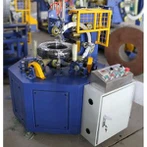
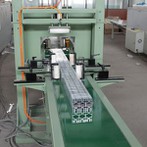
When selecting a steel coil packing line, you need to consider not only the level of automation, packing efficiency, and equipment cost, but also the orientation in which the steel coil should be packed. For steel coil packing equipment, horizontal packing and vertical packing are two common solutions, and they differ significantly in equipment structure, packing methods, applicable scenarios, and on-site layout.
If you only compare equipment prices, it is easy to overlook the factors that truly affect production efficiency. The dimensions, weight, packing requirements, and subsequent transportation methods of different steel coils may all affect equipment selection. This article will analyze how to choose between vertical and horizontal lines from the perspectives of working methods, core differences, applicable scenarios, and procurement considerations.
What Is a Horizontal Steel Coil Packing Line?
A horizontal steel coil packing line generally refers to an equipment solution in which the steel coil is packed in an approximately horizontal orientation. The axis of the coil's inner hole is roughly parallel to the ground, and the coil is usually supported by saddles, support rollers, or dedicated conveying mechanisms before entering the corresponding packing station.
Such solutions can be configured with different wrapping and strapping mechanisms according to the packing process. For example, the equipment can wrap around the outer circumference of the coil, or handle the coil end faces or specific parts as needed.
The specific structures of horizontal steel coil packing lines are not all the same. Some equipment uses fixed packing stations, while others work with conveying systems to achieve continuous connection of multiple packing stages.
Horizontal Steel Coil Packing Line Workflow
A typical horizontal steel coil packing process may include the following steps:
- The steel coil enters the packing area via an overhead crane, conveying equipment, or other loading methods.
- The coil is placed on dedicated support or positioning mechanisms.
- The packing mechanism completes outer circumference wrapping or packing of other specified parts according to the set process.
- Strapping, securing, or related auxiliary operations are completed as required by the packing requirements.
- After packing is completed, the coil is transferred to the next process or the finished product storage area.
The specific process depends on the coil specifications, packing materials, and equipment design; not all horizontal packing lines use exactly the same process.
Key Advantages of Horizontal Steel Coil Packing Lines
Suitable for production processes that convey coils in a horizontal orientation
If the coil is already placed horizontally in upstream and downstream processes, the packing line can be designed with corresponding conveying and positioning solutions based on site conditions, reducing unnecessary orientation changes.
Easy to integrate with some existing conveying equipment
For plants already equipped with horizontal coil conveying, support, or transfer equipment, the compatibility of the packing equipment with the existing production process can be assessed to reduce the need for duplicate configuration.
Suitable for specific outer circumference packing processes
If the packing focus is on wrapping, securing, or protecting the coil's outer circumference, appropriate rotating, wrapping, or conveying structures can be selected according to the packing requirements.
However, horizontal packing does not mean that all coils are easier to handle. The weight, width, outer diameter, and packing area of the coil still affect equipment design, support methods, and safety requirements.
What Is a Vertical Steel Coil Packing Line?
A vertical steel coil packing line generally refers to packing the steel coil with its axis in an approximately vertical orientation. In this case, the axis of the coil's inner hole is roughly perpendicular to the ground, and the coil generally enters the packing station in an upright position.
This type of equipment is usually designed around the packing requirements of the coil's outer circumference or end faces. Depending on the specific solution, the equipment can be configured with rotating mechanisms, packing material feeding devices, orbital wrapping mechanisms, and corresponding positioning and safety devices.
Note that different equipment suppliers may name "horizontal" and "vertical" differently. During procurement, you should confirm whether the equipment refers to the coil axis direction, the orientation of the packing station, or the movement direction of the packing mechanism, to avoid judging the equipment structure by name alone.
Vertical Steel Coil Packing Line Workflow
A typical vertical steel coil packing process may include:
- The coil is transferred to the designated packing area.
- The coil is brought to the upright position required by the equipment through tilting, lifting, or other suitable methods.
- The positioning mechanism secures the coil at the packing station.
- The packing mechanism completes wrapping of the coil's outer circumference, end faces, or specified parts according to the process requirements.
- After packing is completed, the coil is transferred to subsequent processes or the finished product area.
Not all vertical packing lines require tilting before packing. If the coil already enters the packing area in the required orientation, this step may be omitted. Whether tilting is needed depends on the upstream process, equipment structure, and coil handling solution.
Key Advantages of Vertical Steel Coil Packing Lines
Suitable for packing needs of some upright coils
If the coil is stored, handled, or processed in an upright orientation in subsequent operations, a vertical packing solution can be designed around this state.
Convenient for designing combined packing of end faces and outer circumference
When the packing process involves multiple parts, the corresponding packing mechanisms and material paths can be planned according to actual needs.
Opportunity to simplify material flow in specific plants
If upstream coils are already conveyed in an upright orientation and downstream processes can maintain this orientation, a suitable vertical packing solution may reduce additional orientation changes.
However, if the coil originally enters the production line in a horizontal orientation while the vertical packing equipment requires upright operation, further consideration should be given to tilting equipment, lifting processes, floor space, and safety protection. These factors may increase project complexity and cost.
Horizontal vs Vertical Steel Coil Packing Lines
The core difference between horizontal and vertical packing lines lies in the orientation of the coil when entering the packing station, and the impact of this orientation on equipment structure and production process.
|
VS |
Horizontal Steel Coil Packing Line |
Vertical Steel Coil Packing Line |
|
Coil orientation |
Coil axis roughly parallel to the ground |
Coil axis roughly perpendicular to the ground |
|
Equipment support |
Often uses saddles, support rollers, or dedicated support mechanisms |
Usually uses support and positioning structures suitable for upright coils |
|
Packing mechanism |
Can be configured according to outer circumference, end faces, etc. |
Can be configured according to outer circumference, end faces, etc. |
|
Loading/unloading method |
Depends on the coil's original orientation and on-site conveying solution |
Depends on the coil's original orientation; some projects may require tilting |
|
On-site layout |
Needs to consider horizontal conveying, support, and transfer space |
Needs to consider upright support, positioning, and possible tilting space |
|
Applicable conditions |
More suitable for solutions matching horizontal material flow |
More suitable for solutions matching upright material flow |
|
Investment cost |
Depends on equipment configuration, conveying method, and automation level |
Depends on equipment configuration and whether additional tilting and handling equipment is needed |
|
Maintenance focus |
Support, conveying, positioning, and packing mechanisms |
Support, positioning, tilting mechanisms (if any), and packing mechanisms |
It should be emphasized that there is no absolute superiority between horizontal and vertical lines. Equipment cost, packing speed, and final packing quality all need to be judged in combination with the specific equipment structure and production conditions; conclusions cannot be drawn based solely on the coil orientation.
Which Steel Coil Packing Line Is More Suitable for Your Plant?
When selecting, rather than simply judging whether horizontal or vertical is better, it is better to first analyze the state of the steel coil throughout the entire production process.
When Is a Horizontal Steel Coil Packing Line Suitable?
If your plant has the following conditions, you can prioritize evaluating horizontal packing solutions:
- The coil is already in a horizontal orientation when entering the packing area.
- Existing conveying equipment and support mechanisms are suitable for horizontal coil transfer.
- The packing process mainly focuses on the coil's outer circumference or specified parts.
- You hope to plan packing equipment based on the existing production process and evaluate the possibility of reducing additional orientation changes.
For example, in a steel processing plant, after the upstream process is completed, the coil is already conveyed to the packing area by horizontal support equipment. If downstream handling and packing requirements also allow maintaining this orientation, the horizontal packing solution is worth prioritizing.
However, it is still necessary to confirm whether the coil dimensions, weight, packing materials, and station structure match the equipment design.
When Is a Vertical Steel Coil Packing Line Suitable?
If your plant has the following conditions, you can focus on evaluating vertical packing solutions:
- The coil is already in an upright state before packing.
- Upstream and downstream equipment can adapt to the handling and transfer of upright coils.
- The packing process needs to be designed for specific parts of upright coils.
- The on-site layout is suitable for arranging vertical packing stations and meets equipment operation and safety requirements.
For example, if a plant has already completed coil orientation conversion before the packing area, and subsequent storage and handling are mainly in an upright state, designing vertical packing equipment around this process may help reduce unnecessary material orientation adjustments.
However, if dedicated tilting equipment needs to be added, the enterprise should include the investment, operation time, floor space, and safety requirements of tilting in the evaluation.
What Factors Should Be Considered Before Selecting a Steel Coil Packing Line?
In addition to the coil orientation, several other factors directly affect the applicability of horizontal or vertical steel coil packing lines.
Coil Dimensions and Weight
First, it is necessary to clarify the coil's outer diameter, inner diameter, width, weight, and the common specification ranges in daily production.
Different specifications may have different requirements for support structures, positioning mechanisms, equipment load capacity, and packing mechanisms. In particular, plants with large specification variations need to confirm whether the same equipment can cover all target specifications and what adjustments are needed when switching specifications.
Packing Materials and Packing Requirements
Steel coil packing may involve rust-proof paper, VCI anti-rust materials, plastic film, moisture-proof materials, kraft paper, steel strapping, and corner protectors.
Different packing materials may have different feeding methods, wrapping paths, and securing methods. Therefore, before selecting equipment, it is necessary to clarify which parts of the coil need protection, what materials are used, and what state the packing should achieve after completion.
Whether the horizontal or vertical solution is suitable ultimately depends on whether its packing mechanism can achieve these specific requirements.
Production Capacity
The enterprise needs to evaluate the equipment's actual processing capacity based on the number of coils packed per day or per shift.
In addition to the time required for the equipment to perform packing actions, factors such as coil loading/unloading, positioning, material replenishment, specification switching, and finished product transfer should also be considered.
If a set of equipment has a fast packing action but upstream and downstream processes often wait, the actual output of the entire production line may still be limited. Therefore, it is best to evaluate capacity from the perspective of the entire material flow path rather than only comparing the operating speed of a single machine.
Plant Layout and Material Flow
The equipment layout needs to match the plant space, coil storage locations, overhead cranes or other handling equipment, and upstream and downstream processes.
For horizontal packing solutions, it is necessary to focus on checking horizontal conveying paths, support positions, and coil transfer space; for vertical packing solutions, it is necessary to confirm upright stations, tilting requirements, and related operating space.
If the enterprise plans to integrate the packing line into the existing production system, it should confirm in advance the interfaces, conveying directions, and connection methods between equipment.
Total Project Cost
When comparing quotations, you should not only look at the price of the packing main unit.
It is necessary to confirm whether the quotation includes conveying equipment, tilting equipment, control systems, safety protection, installation and commissioning, and operator training. For projects requiring special design or integration with existing production lines, the corresponding engineering costs should also be confirmed.
If a solution requires additional tilting or transfer equipment, the cost of these equipment and their operation and maintenance should also be included in the total investment evaluation.
Can a Steel Coil Packing Line Adapt to Coils of Different Sizes?
Different coil specifications and packing requirements may require different equipment configurations. Some packing lines can adapt to coils within a certain size range by adjusting equipment parameters, positioning mechanisms, or related components; for projects with large specification spans or special packing processes, dedicated equipment design may be required.
Therefore, when requesting quotations, it is recommended to provide the following information:
- Minimum and maximum coil outer diameter
- Coil inner diameter, width, and weight range
- The orientation of the coil when entering the packing area
- Packing materials and specific packing requirements
- Target packing volume and production shifts
- Existing conveying equipment and plant layout
This information can help equipment suppliers judge the feasibility of horizontal or vertical solutions and evaluate whether additional tilting, positioning, conveying, or other auxiliary mechanisms are needed.
Conclusion
Horizontal and vertical steel coil packing lines each have their applicable scenarios. The real difference is not that one type of equipment is necessarily more advanced than the other, but which solution better matches the coil's actual orientation, packing requirements, and production process.
If the coil is mainly in a horizontal orientation before and after packing, the horizontal packing solution can be prioritized; if the production process is mainly based on upright coils, the vertical packing solution can be further evaluated. For projects requiring orientation conversion, additional equipment, operation time, safety requirements, and overall investment should also be considered comprehensively.
Jinglin Packing focuses on industrial packing equipment and steel coil packing line solutions, and can help evaluate appropriate equipment configurations based on coil specifications, packing materials, production capacity, and on-site layout.
If you are planning a new steel coil packing line or wish to optimize an existing steel coil packing process, you are welcome to contact Jinglin Packing to provide coil parameters, packing requirements, and site conditions to jointly explore a packing line solution that better suits your production needs.