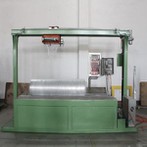
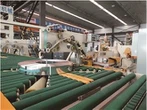
In the modern steel industry, high efficiency, safety, and reliability are the core competencies of enterprises. With the expansion of production scale and the increasing complexity of logistics, traditional manual strapping and packaging methods can no longer meet the needs of enterprises. The emergence of steel packing machines has not only improved production efficiency but also ensured packaging quality and transportation safety, becoming an indispensable piece of equipment in modern steel manufacturing.
Problems Faced by Traditional Packaging
Steel materials are diverse, ranging from heavy steel plates and coils to irregularly shaped steel, each requiring different strapping methods and strengths. Manual operation is not only slow but also prone to uneven strapping, steel damage, or safety accidents. Low production efficiency, difficulty in guaranteeing packaging quality, and high labor costs have become bottlenecks restricting enterprise development.
- Low Efficiency: Manual strapping is slow, with a limited number of straps that can be completed per hour, making it difficult to meet the demands of large-scale production and export orders.
- Significant Safety Hazards: Steel materials are large and heavy; manual handling and strapping can easily cause pinching, bumping, or slippage accidents. Frequent operations increase safety risks.
- Unstable Packaging Quality: Uneven bundling tightness and misalignment increase the risk of collisions or shifting during transportation, leading to increased losses and returns.
- High Labor Costs: Rising labor costs and high operational intensity mean that relying on manual bundling on large-scale production lines will significantly increase operating costs.
- Difficulty Handling Diverse Steel Specifications: Steel of varying thicknesses, widths, and shapes requires different bundling strengths and handling methods, making it difficult to achieve standardization and consistency manually.
- Heavy Logistics Pressure: Non-standard packaging can lead to damage to steel during warehousing, handling, and transportation, increasing management difficulty and economic losses for enterprises.
Faced with these challenges, enterprises urgently need an efficient, safe, and standardized automated solution. The Steel Packing Machine, through automated, standardized, and intelligent operation, significantly improves packaging speed and efficiency, ensuring that each bundle of steel is securely bundled and neatly arranged, while reducing labor costs and accident risks. With the help of intelligent monitoring systems and precise mechanical control, the Steel Packing Machine enables full-process visual management and high-precision operation, providing modern steel enterprises with reliable, efficient, and sustainable production and logistics support, truly becoming an indispensable core piece of equipment in modern steel manufacturing.
Core Functions of a Steel Packing Machine
The Steel Packing Machine combines mechanical automation, electronic control, and intelligent monitoring technologies, possessing multiple professional functions:
Fully Automatic Strapping System
- Automatically adapts to steel of different specifications and weights, achieving uniform and stable strapping.
- High-speed strapping feeding system, completing dozens of straps per minute, significantly improving production efficiency.
Multi-Specification Adaptability
- Handles steel plates, coils, bars, profiles, and irregularly shaped steel, meeting the diverse production needs of steel mills and processing plants.
- Strapping width, thickness, and strapping tightness are freely adjustable, suitable for customized orders and special steel specifications.
Intelligent Monitoring and Fault Warning
- Equipped with sensors and a PLC control system for real-time monitoring of strapping status.
- Detects strapping breakage, strapping misalignment, or equipment malfunctions, promptly alarming and automatically stopping the machine to avoid secondary losses and production interruptions.
Energy-Saving and Durable Design
- High-strength body and wear-resistant materials withstand continuous high-intensity operating environments.
- Energy-saving motors and intelligent control systems reduce energy consumption, support green production concepts, and meet the requirements of sustainable development for enterprises
Easy Operation and Maintenance
- Touchscreen interface with multilingual support, allowing different operators to quickly learn and use the system.
- Modular design allows for easy disassembly and replacement of key components, reducing maintenance costs and downtime.
Safety Protection System
- Safety railings, anti-pinch devices, emergency stop buttons, etc., ensure operator safety.
- Complies with international industrial safety standards, reducing the risk of workplace injuries and equipment liability.

Economic Benefits of Steel Packing Machines
1. Increased Production Efficiency and Capacity
Investing in steel packing machines is not just about equipment upgrades; it's a crucial step for businesses to improve overall operational efficiency and capacity. Steel packing machines can pack dozens of bundles of steel per minute, far exceeding the speed of manual operation, making them particularly suitable for high-volume production lines. Simultaneously, the automated process ensures that the packaging process is synchronized with the production line, avoiding production bottlenecks caused by manual packing. The intelligent system can quickly adjust packing parameters to adapt to steel of different specifications, thicknesses, and lengths, enabling businesses to flexibly handle small-batch, multi-variety orders and improve overall production efficiency.
2. Reduced Labor Costs and Labor Intensity
Steel packing machines effectively reduce labor costs and labor intensity. Automated equipment replaces a large amount of manual packing work, significantly reducing labor expenses and training costs, as intelligent operation simplifies the process, allowing new employees to quickly learn. Furthermore, employees no longer need to handle heavy steel, significantly reducing labor intensity and safety risks, effectively controlling workplace injury costs and management pressures for the company.
3. Reduced Material Loss and Logistics Risks
Steel Packing Machines excel at reducing material loss and logistics risks. Standardized strapping ensures consistent strapping force and arrangement for each bundle of steel, preventing slippage or collisions during transport and thus reducing breakage rates. This not only directly reduces the costs of returns, replacements, or compensation but also optimizes the efficiency of packaging material usage. The intelligent control system accurately calculates strapping length, avoiding waste and improving economics.
4. Enhanced Product Quality and Customer Satisfaction
Using Steel Packing Machines also improves product quality and customer satisfaction. Because each bundle of steel meets standards, there is virtually no damage or displacement when it reaches the customer, ensuring delivery quality. Efficient and standardized packaging not only reduces customer complaints but also enhances the company's credibility and trust among customers, contributing to the establishment of long-term partnerships and improving market reputation.
5. Long-Term Return on Investment
From a long-term return on investment perspective, the value of Steel Packing Machines is very evident. Taking medium to large-sized steel mills as an example, the introduction of fully automated packaging machines can reduce labor costs by 30% to 50%, and transportation losses by over 50%. Equipment investment can typically be recovered within one to two years. Business operational risks are effectively reduced, with a significant decrease in economic losses caused by human error, non-standard packaging, or transportation damage. Simultaneously, efficient, safe, and standardized packaging capabilities not only optimize internal management but also give companies a competitive edge in the fiercely competitive steel market.
Selection and Procurement Guide
Choosing the right steel packing machine not only affects production efficiency but also directly relates to a company's operating costs, logistics security, and long-term return on investment. When purchasing steel packaging machines, the following dimensions should be considered comprehensively:
1. Automation Level
- Manual Packing Machine: Suitable for small-batch, low-frequency production with low investment costs.
- Semi-automatic Packing Machine: Suitable for medium-volume production, automating some processes to improve efficiency.
- Fully Automatic Packing Machine: Suitable for high-volume production lines, achieving fully automated operation throughout the entire process.
2. Load-bearing Capacity and Specifications
- Select appropriate equipment based on the size, weight, and shape of the steel, and reserve space for future capacity expansion.
3. Supplier Qualifications and After-Sales Service
- Choose experienced and reputable manufacturers to ensure equipment quality, installation, commissioning, and long-term maintenance.
4. Safety and Maintenance Ease
- Equipped with safety railings and emergency stop devices to ensure operator safety.
- Modular design for easy maintenance and parts replacement, improving production line stability.
Modern steel companies face challenges beyond production speed; they must also address how to achieve sustainable development while ensuring quality, safety, and efficiency. Steel Packing Machines, through efficient, intelligent, and reliable automated strapping, help companies significantly reduce labor costs, minimize material waste, improve transportation safety, and provide standardized solutions for production and logistics.
Whether for large-scale steel mill production, construction projects, or export logistics, scientifically selected and properly maintained Steel Packing Machines can be a key tool for enhancing a company's competitiveness.
Contact Jinglin Packaging today for a customized Steel Packing Machine solution to ensure efficient, safe, and reliable steel packaging, supporting your company's steady growth.